
Nolan's Generalised Worldly Representation Of Homer's Odyssey And Why We Should Regain Specificity Again
A contemplation on Hollywood's prevailing attitude towards a generalised worldly representation of stories and what we can do to bring back the gift of specificity and enchantment.

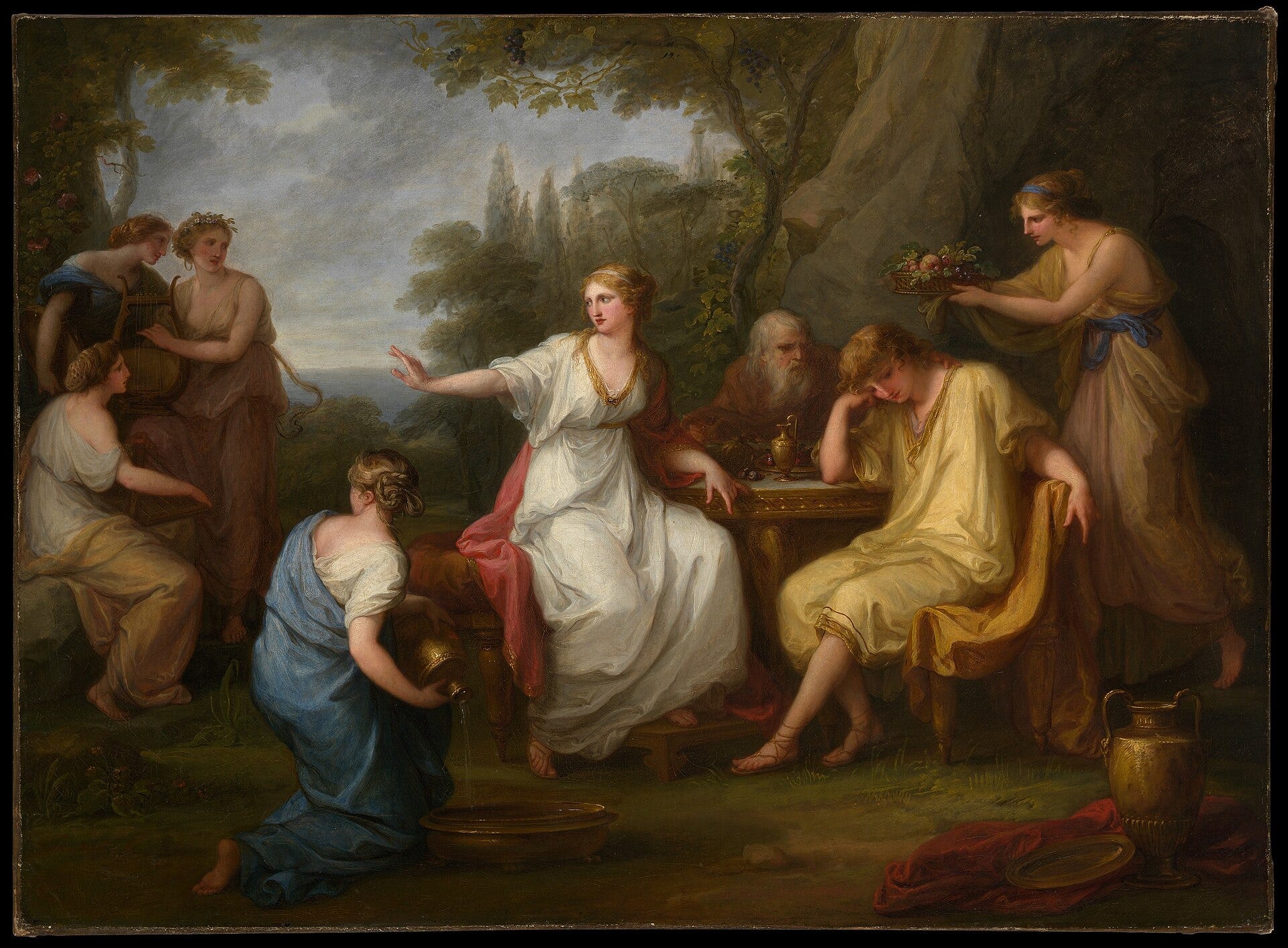
As an artist and writer, I love exploring novelty in a diverse range of sources for inspiration. I love being immersed in the lives of other people, in different cultures and contemplating what they might be thinking about in their lives. I am endlessly fascinated by the past, especially the ancient and medieval past. But I also find some curiosity in learning about more modern times so that I can better understand myself and my place within modern society. I wouldn’t be a writer otherwise.
As humans, we seek out novelty, we seek out taking risks… and I do think that our stories should reflect this. This is partly why I find it so disappointing that the film industry in America, in Britain and other Western countries has retreated from this. In the pursuit of diversity, we have lost it.
In this contemplation of a sorts, I want to explore what has been said about Christopher Nolan’s new Odyssey film as a recent example but by no means the only example of this prevailing attitude in Hollywood which has erased diversity in the name of diversity. In part because this has been what made me think about it more recently.
Worldly Representation in Hollywood
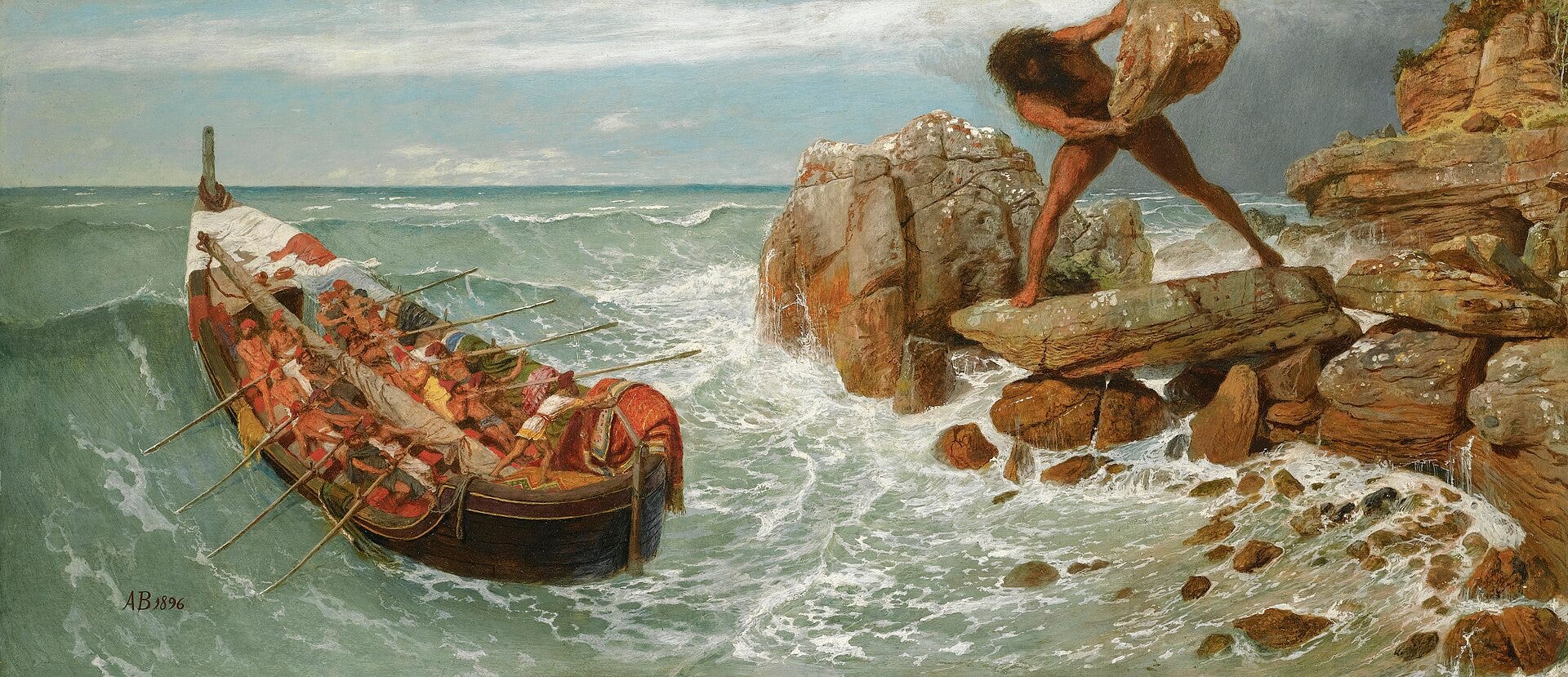
“This is a mythological story. I’m very supportive of Chris’ intention with it and with the version of this story that he is telling. Our cast is representative of the world.”
—Lupita Nyong’o.
This quote is the prevailing attitude within Hollywood for at least the past decade. This idea that the casting represents the world, that we are telling a story for a modern audience and so we must reflect the modern audience in all our stories. Except that in doing so we have lost something. We sever ourselves from the context and origin of the story.
When we state that Helen of Troy, that Cleopatra, that Anne Bolyn are black women then we erase these women. We erase something fundamental about their origin, about their struggles, about who they are and what they went through. We lose the context of time and place. These are real historical figures, the stories told were based on their real life.
I think too often Hollywood and the wider film industry gets lost in the idea that they are adapting a story that they forget that these figures weren’t fictional. That mythology in Homer’s time would have basis in history as it tells the tales of the Trojan war and then the homecoming of the hero Odysseus. Homer’s Odyssey has shaped first Greek history and culture, then through to the Romans, and then the larger western culture as his epic has been rediscovered and translated and passed down to us for over a thousand years.
We simply do not need to see a cast that represents the world when adapting the Odyssey because it has shaped us through the generations in ways that most of us don’t even notice. Greek philosophy and culture was important to both the medieval and renaissance thinkers and artists just as it was to the Romans. It shifted the way that we think about the world, we expanded upon these thoughts to reach where we are now. It shaped our thoughts, our language, our culture. That is why we must not ignore it, that we must not subvert or treat it disrespectfully. But instead grapple with it, that we might understand ourselves better and what we have inherited.
Nolan was not just given the greenlight to adapt a mythological story to the big screen. He was handed the funding to tell us an ancient story of homecoming which is a Greek inheritance. The Greek still live now. This story still shapes the Greeks, it is in their culture and history. It deserves reverence. It deserves to be told in the same way that Homer would have told it, especially as we have not had the Odyssey told to us as a mainstream Hollywood production prior to this.
We have lost something profound. This opportunity could have told Homer’s Odyssey as close as possible to how he would have known it. We could have been immersed in an ancient Greek world, one filled with the Greek Gods and Goddesses, with an arduous journey that enchants us and then the eventual homecoming triumph. Instead for the sake of diversity we have lost it.
This is the tragedy when you think that one size fits all when it comes to applying diversity. We have lost Greek diversity to make room for the politics and demographics of Hollywood. This has not increased diversity, it has stifled diversity in favour of Hollywood casting demographics and politics. No longer can you claim that you are increasing diversity in representation when this is the prevailing attitude across Hollywood in storytelling. In funding projects, in giving awards out for films. This is the normal now. This is the pattern that we can see with clarity. Once we see it then it cannot be unseen.
The Generalisation of Greek and Homeric Legends
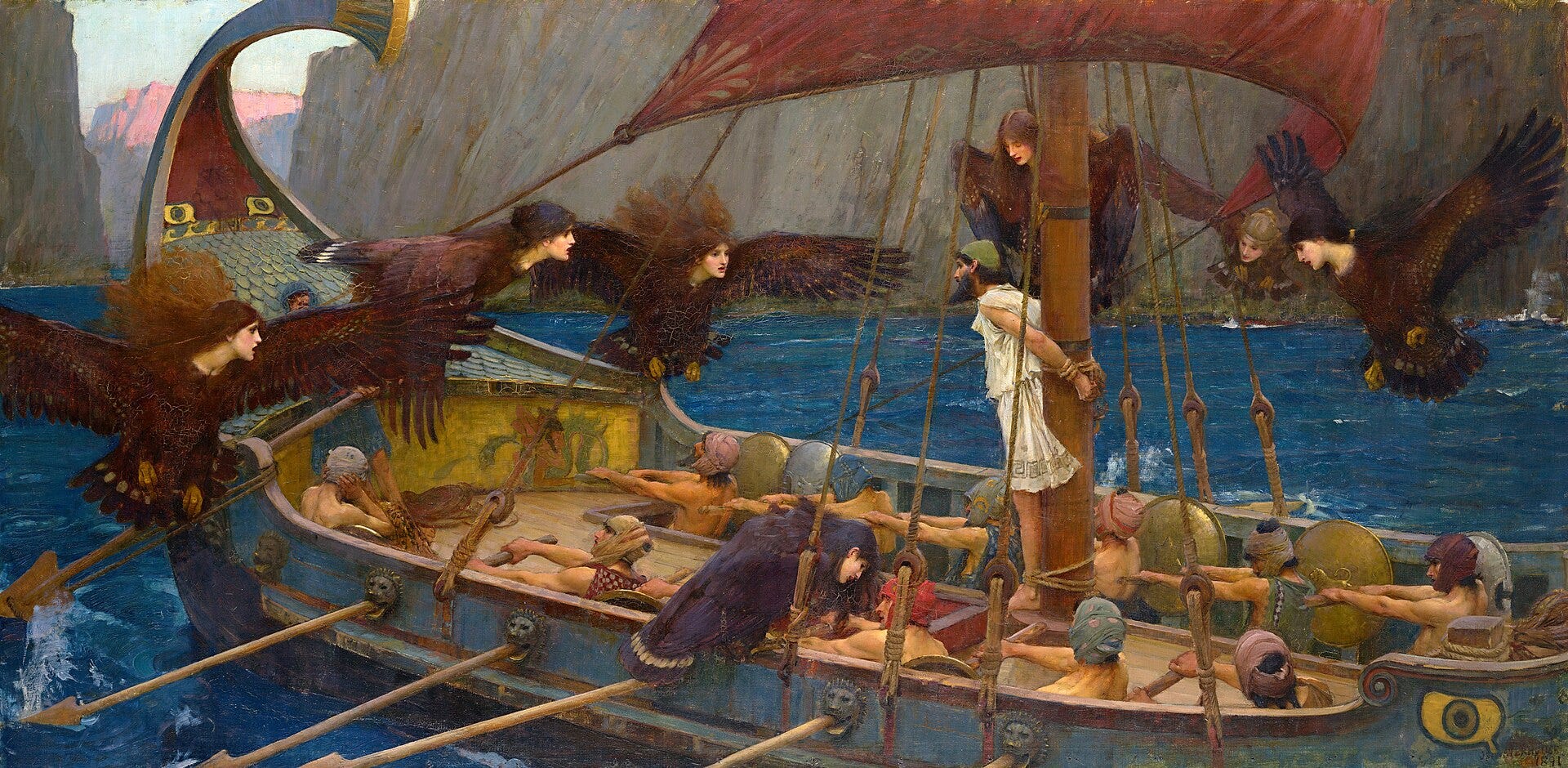
“Because I’m all about the diversification of the African continent. You know often times the African continent when it’s portrayed on in cinema, it’s very general. And we were all hellbent on it not being general so the fact that, you know, our fictitious African nation speaks the language Xhosa. We needed to learn that language, we needed to you know get the accent in English. Everything, though, it’s a fictitious nation… it is brought to life and derived from real African cultures. … And hopefully there is a celebration, as a result a respect for these very wealthy and diverse cultures that often get washed as one thing.”
—Lupita Nyong’o.
When it came to representing Black Panther, both Hollywood and Lupita Nyong’o demonstrated that getting representation right so that it would be brought to life and we would be immersed in this world was important. That we would have respect for these wealthy and diverse cultures rather than washing them as one thing is important. It did not seem to matter to her that she was portraying a fictitious African nation. They were hellbent on not making Africa general. Hollywood led the way when it came to Black Panther and Africa. Isn’t it time that we did the same for both European mythology and fiction? We have the model demonstrated here so why not expand it?
Creating a cast that represents the world when depicting Greek mythology is turning a mythology about a specific people into one that is general. General in the sense that it represents Hollywood demographics now rather than the reality of ancient Greece or Ancient Europe. We have gone the opposite way in making it more general to modernity in order to appeal to the modern audience. We have not increased diversity but diminished it. In effect, Hollywood now states that all stories, all settings and peoples are the demographics of Hollywood itself. They have made this political in such a way that it benefits them.
Lupita Nyong’o expects us to suspend our disbelief when she portrays Helen of Troy. By her own admission, she is not respecting the very wealthy and diverse cultures of ancient Greece. She could have led the way in turning this role down, demonstrating that she respects the Greeks like she respects the Africans. But she didn’t. She supports what Nolan is doing in generalising and disrespecting Greece and Homer’s Odyssey, she gains for doing this. Who can take her seriously after this? The questions that one has to ask now, did she have a change of heart? Is she just discussing what talking points she is given without meaning what she says?
We should have seen ancient Greece and Homer’s Odyssey come to life on the big screen. We should have been immersed in it, through the casting, the settings, the designs of costumes and languages used. We should have been enchanted. Film is a hugely visual medium so all of these are important when bringing stories to life. They give us a sense of wonder, of a people and of a time and place. This does not happen when generalising through diversity for a modern audience as you lose all of these things.
This film could have been written for me. I am not Greek but after reading Homer I have been deeply inspired by his enchanting storytelling and poetry. I should have loved this film, I want to be sent to Odysseus’s world as he and Homer would have known it and be immersed in it longer. So much of what I hear coming from this film tells me that the source material will not be respected, that we will lose out on the enchantment that draws us to mythology, that we will miss out on the context behind time and place and people, that we will lose out on what makes this mythology so enduring through the ages and how it has shaped us and continues to shape us. There is a continuation for the Greeks, there is a continuation for those of us that inherited Western cultures which have been shaped by Greek culture, history and thought like the Homeric legends.
Enchant Stories
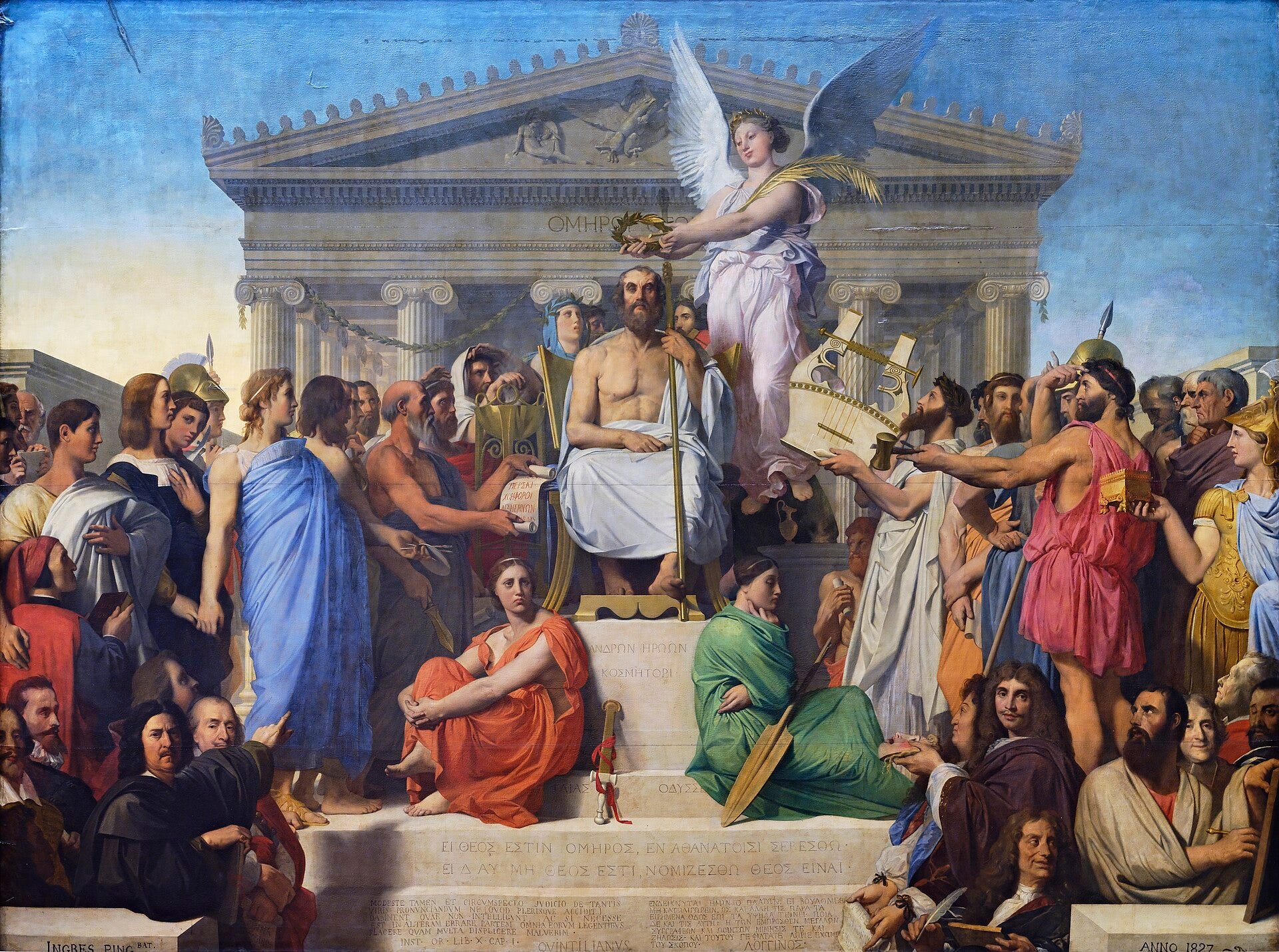
The answer to this malaise is a tricky one. We cannot save Nolan’s Odyssey as it has been filmed and he has not learned from what has been stated here. One suspects that his decisions are deliberate in this, that it lies in the corruption of Hollywood when it comes to both funding films and now what it takes to win the big film awards. He is checking diversity boxes from guidelines given to him. None of this is a secret as the industry has been open about doing these things for a while now. They have felt very safe when discussing their politics, their guidelines and what their motivations behind creating film and television projects are. So safe that if you disagree then they will shut you down through calling you names and attempting to cancel you. More power to them if they want to continue down this path because their spell is breaking.
As the subtitle here suggests, I think that the answer lies somewhere in enchanting our stories. It will require breaking away from Hollywood and the massive film industry, to fund our own projects and start our own awards. We need to make them resilient to being taken over by the ideology that has taken over Hollywood right now and gatekept many of us out. We need to create and preserve an artistic scene that will draw the talent in. This is the role of film-makers, of actors, of script writers and more involved in film productions.
We need to get back to taking risks, to providing novelty and entertainment. The audience hungers for this. It is not physical representations that move us to watch films, we do not need to see ourselves in every film that we watch. We need the industry to take risks and to expand what is offered to us, to bring back novelty which has been lost to us. We need to move away from generalisations, we need to start telling specific stories.
A medieval village has expectations attached to it. Those expectations are broken when we see the Hollywood demographics that I spoke about. It breaks our trust, it breaks our immersion. It breaks all sense of people, time and space. Because where are we when everywhere looks the same in the story wherever you go? That a medieval village looks like the modern city in California? Whether this is based in a European village, an Asian village or a tribal village from Africa.
Instead, to create immersion and build trust we need stories of a specific people, of a specific time and place, of a specific individual who has gone on to do something extraordinary that we can look up to. We need to bring back heroes, to bring back generals, saints, artisans, athletes, anyone with a story that grounds us and reminds us who we are as they love, sacrifice and achieve. To do this for people around the world. There is so much inspiration to tap into when you can take risks.
I support having diversity. But it should not be the diversity in casting nor enforced guidelines. It should be the diversity that comes when telling stories, that comes when exploring different perspectives and cultures in the world. If we are prepared to take risks, to tell stories which haven’t been told before or to tell stories faithful to the source material from around the world then I think we will reach diversity in a natural and authentic way. This way it will be a cultural exchange as we are immersed in those settings, cultures, legends and people.
There is another benefit for those economic thinkers. It matters less when a film flops because other films which do strike the zeitgeist at the right time will do well. When a film does well, it can pick up the slack for the others that didn’t. But if you make every single film the same then you get flop after flop after flop. It stops being a novelty. There is a lot of fortune and skill in creating a film that will resonate with enough people to create a profit, you have to be someone that can be forward thinking and able to delay gratification. It takes a long time to create a film. The key isn’t in making all stories for the global modern audience. But having a few different stories which target different specific audiences and others will gravitate to one because they like that too.
This last point is something that those who watch films or television can participate in as well as those who create them. Become stewards of your culture and legends, read them and become immersed in them. Let them enchant you with wonder, let them shape you into becoming better people as you grapple with them. Discuss them with others, pass them down to your children and the next generation. Hold them with reverence. Make them an event and hold them in common with others so they remain in the common cultural memory. You cannot change what other people do but this is within your control as it pertains to what you do. This is a beautiful thing to do.
None of us are a generalised people. We have roots even if we haven’t been told them or if we forget them. Those roots shape us, our thinking, our language, our culture. It is the sacred role of traditional oral and written storytelling and poetry to reveal those roots to us, to speak to us about how we came to be where we are and to inspire us to become who we are. It tells us of our character and values. It gives us the gift of specificity. We are a specific people from a specific time and specific place. There is continuity in that specificity as we trace it through the generations to us, as we steward and cultivate our culture for future generations to come.